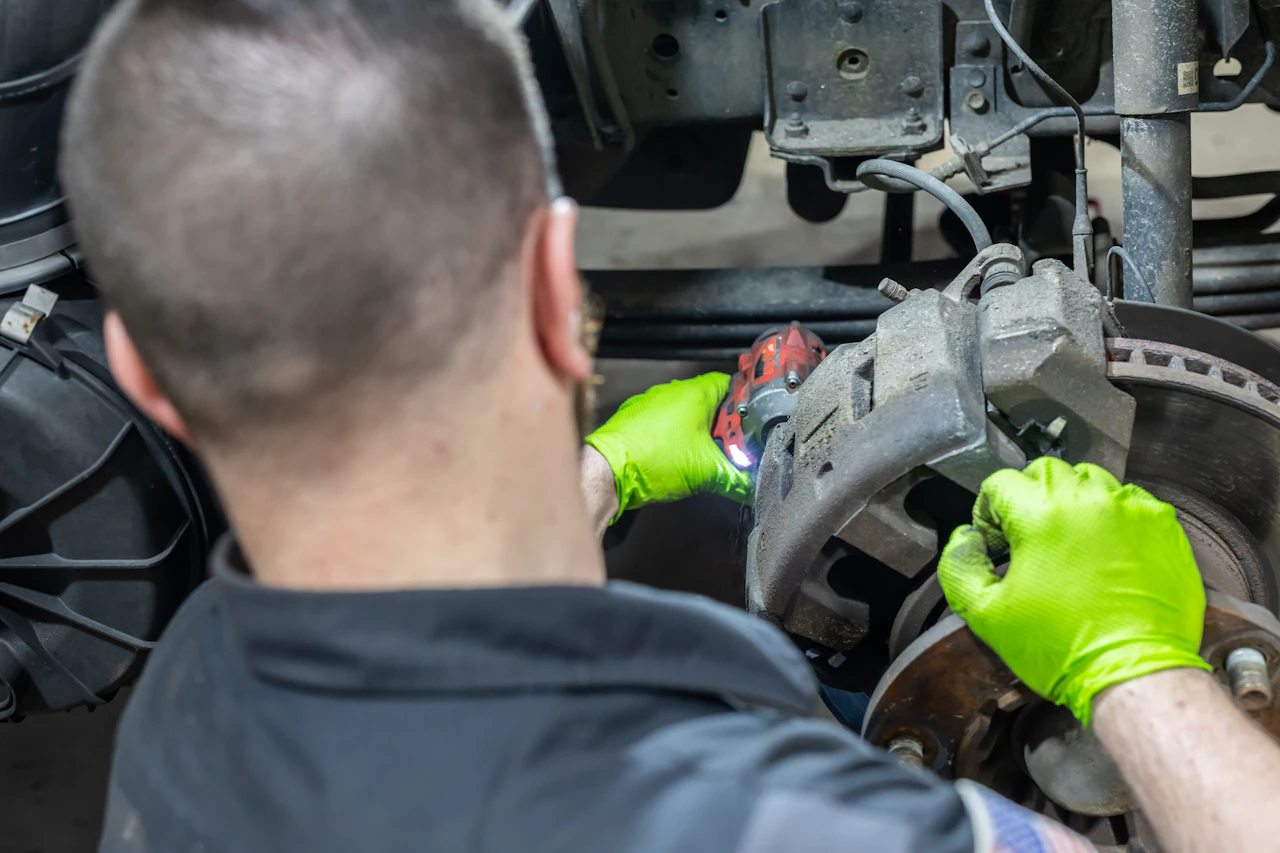
Brakes are the system that keeps you alive on the road with effective stops. At 80,000 pounds and barreling down a highway, even a small brake failure can lead to massive consequences. Yet, too often, brake maintenance gets rushed, skipped, or done incorrectly.
For fleets and drivers operating out of Plain City, OH, where road salt, seasonal fluctuations, and rough rural routes put brake systems to the test, avoiding common mistakes is crucial. Let’s dive into 5 brake maintenance missteps that could put your truck and everyone around it in danger.
1. Ignoring Air System Moisture
If your rig uses air brakes (and most Class 7 and 8 trucks do), moisture is enemy number one. Compressed air naturally attracts water. Without regular draining and air dryer service, that moisture builds up in your tanks and lines, especially in Ohio’s humid summers and freezing winters. Frozen or corroded air lines can completely disable your braking system.
Here’s what can go wrong:
- Moisture freezes in lines, causing brake lockups.
- Internal corrosion eats through valves and fittings.
- Ice crystals can block airflow, leading to total brake failure.
What to Do:
- Drain air tanks daily or install auto-bleeders.
- Service or replace your air dryer cartridge annually.
- Inspect for water in service chambers during winter PMs.
2. Misadjusting Slack Adjusters
Slack adjusters control the distance your brake shoes must travel to contact the drum. If they’re out of adjustment, the brakes won’t apply evenly, or at all.
Manual slack adjusters require regular adjustment. Automatic slack adjusters (ASAs) adjust automatically, but only if the system is functioning correctly and receiving full brake applications.
Common Mistakes:
- Forgetting to check for proper stroke length.
- Not using a brake application gauge.
- Assuming ASAs don’t need to be inspected.
Red Flags:
- Uneven brake wear across axles
- A truck “pulling” under braking
- Audible “air dump” with little braking force
Best Practice: Measure pushrod travel. If it exceeds specs, adjust or replace the slack adjuster. Train drivers to make hard brake applications periodically to keep ASAs working properly.
3. Reusing Worn Brake Shoes or Drums
Sometimes, in the name of cost-cutting or time-saving, techs reuse brake shoes or drums that should’ve been tossed.
Here’s the problem:
Even if the lining thickness looks okay, heat cracks, glazing, or uneven wear can dramatically reduce braking efficiency or lead to brake fade on long descents.
What to Inspect:
- Heat checking on drums (small spiderweb cracks)
- Glazed linings (shiny, hardened surface)
- Oil contamination from failed seals
- Scoring or grooves in the drum surface
Important Note: Reusing damaged drums puts your entire braking system at risk, especially under heavy loads or in emergency stops.
4. Overlooking Camshaft or Bushing Wear
Inside every drum brake system is an S-cam, a rotating shaft that pushes the brake shoes apart. These cams sit in bushings, and over time, both can wear down. This creates excess play in the system, which translates to weaker brake force or a delayed response.
Why It's Dangerous:
- A sloppy camshaft means the shoes apply unevenly.
- Brake timing becomes unpredictable, especially during quick stops.
- Premature wear on drums, shoes, and pushrods.
Signs of Cam or Bushing Wear:
- Irregular brake shoe wear
- Visible play in the cam when moved by hand
- A “lag” before brake engagement
Solution: During brake service, always check camshaft and bushing tolerances. If there’s side-to-side movement, it’s time for a rebuild.
5. Skipping Brake Inspections During PMs
Too many fleet PMs focus on oil changes, lights, and filters, but brakes get skipped or barely checked. That’s a major liability.
A proper brake system inspection takes time, and it’s more than a quick peek through the wheel well. If you're not measuring wear, checking stroke length, and pulling drums when needed, you're flying blind.
Include These in Every PM:
- Pushrod stroke measurement
- Slack adjuster function test
- Brake shoe lining thickness
- Air leak and pressure decay test
- Drum and cam wear inspection
Fleet Tip: Work with a repair partner like Starbrite Trailers, LLC that understands the nuances of heavy trailer brake systems as well as truck configurations.
Bonus: Not Training Drivers on Brake Reporting
Even the best shop work won’t help if your drivers don’t know how to recognize brake problems. Many issues develop slowly, and the person behind the wheel is your first line of defense.
Teach Drivers to Report:
- Air hissing sounds after shutdown
- Truck pulling left or right under braking
- Long stopping distances
- Dash air pressure warnings
- Vibrations or “chatter” when braking
Catch these issues early, and you avoid bigger (and more expensive) problems later.
Take Action on Brake Maintenance
Brakes aren’t the place to cut corners, not in the shop, not during PMs, and definitely not in winter. These five maintenance mistakes may seem small, but left unchecked, they can cause major damage, DOT violations, or even a fatal crash.
Get in touch with Starbrite Trailers, LLC for quality brake maintenance. For operators and fleet managers, where trucks often face long hauls, tough conditions, and rapid seasonal changes, brake reliability is everything. For more information about trailers, read our article on how to extend brake life.


